


Choosing a progressive cavity pump for reliable long-term operation
At a wastewater treatment plant, two pump specifications might both describe the product as “sludge”. One pump draws liquid sludge from a tank. The other receives dewatered cake as it falls from a centrifuge. Even if both duties call for the same flow rate, the material reaches each pump in a different way. That distinction can determine the inlet arrangement, the protection the pump needs and how reliably it keeps the process moving.
For operators in wastewater treatment, biogas and industry, four questions are worth asking before selecting a progressive cavity pump.
How will the material reach the pump?
Start with what the operator sees during a normal shift. Does the product flow freely from a tank? Does it arrive in batches? How much does its dry solids content vary? A sample taken on a good day may tell you little about the thicker material the pump has to handle at the end of a production run.
For dewatered sludge, an open hopper with a feed screw can help move material into the pumping element. Where the upstream supply is intermittent, it is also worth planning what happens when that supply stops. A low-level signal or dedicated dry-running protection can stop the pump before friction between the rotor and stator damages the elastomer.
What will the maintenance team need to reach?
One practical question for the layout review is simple: could the maintenance team replace the stator with the pump installed where it is shown on the drawing? Check the withdrawal space, which pipe sections would need to be disconnected and whether adjacent equipment would obstruct access. This is also the right time to decide which wear parts the plant should keep on site.
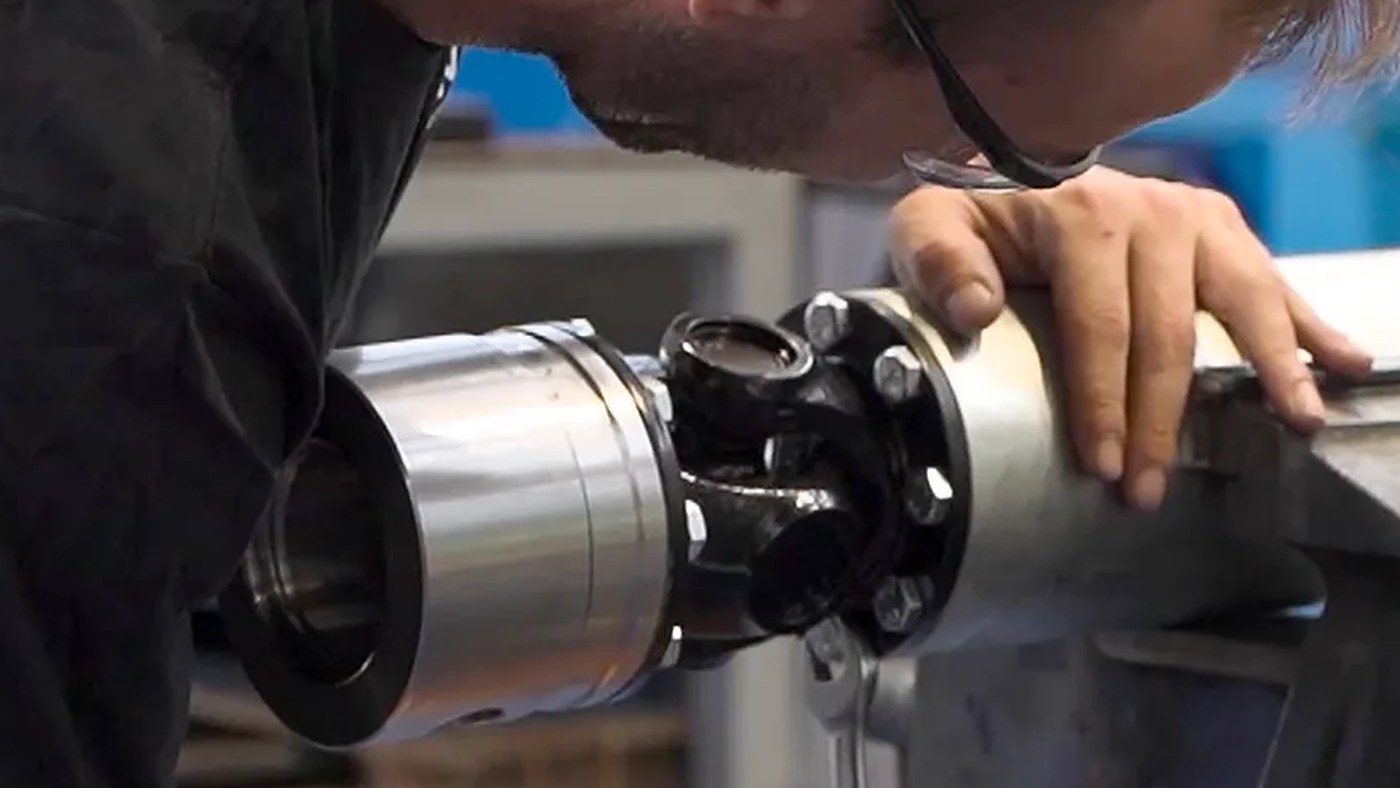
The Premium Line progressive cavity pumps offered by Turoteknikk bring several of these considerations into the design. The reinforced Cardan shaft uses needle-bearing universal joints to transmit torque to the rotor. Inspection ports provide access for routine checks, while the quick-disassembly system simplifies access to wear components during servicing. Standardised motors and gearboxes also give the maintenance team a familiar starting point when planning replacements.
Which operating conditions should guide material selection?
In a biogas plant, fibres in the digestate can make the available solids passage important. In industrial wastewater, abrasive grit may make rotor surface selection and operating speed the more pressing considerations. Where the pump also handles cleaning solutions, the stator elastomer must be compatible with those chemicals at the temperatures used during cleaning.
A useful specification therefore records the normal and maximum flow, differential pressure and temperature, alongside the solids concentration, particle characteristics and cleaning conditions. These details give the supplier a basis for recommending a rotor, stator and operating speed suited to the actual duty.
What will the pump cost over its working life?
For a plant comparing two proposals, that means looking at purchase and installation costs alongside energy use, spare parts, maintenance labour and downtime. A practical comparison uses the same annual operating hours for both options and accounts for what happens to production while each pump is being serviced.
If you are reviewing a sludge, digestate or industrial transfer application, share the operating range, a sketch of the installation and the difficulties your operators encounter most often. Those details help Turoteknikk recommend a pump that your team can run and maintain with confidence.
Need help choosing a pump?
Tell us about your fluid, flow and plant, and we will help you choose the right pump.
- Company
- Turoteknikk Drift AS
- Address
- Hildertunet 2, 1341 Slependen
- Phone
- 67 80 63 00
- mail@turoteknikk.no
