


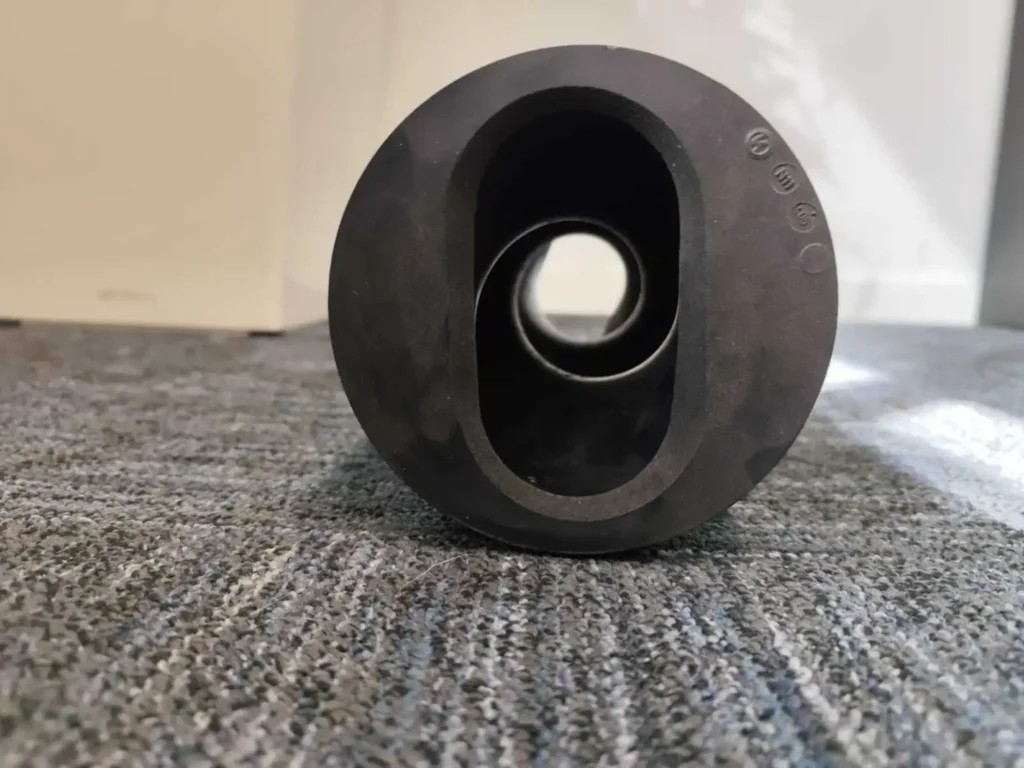
What type of rubber do stators contain? And which material is the most recommended for each application?
Choosing the right rubber for the stator is one of the most important decisions when selecting a progressive cavity pump. The wrong rubber can lead to rapid wear, breakdowns and costly downtime.
The rubber compound must withstand corrosive and abrasive media, whether water- or oil-based, as well as wear from the rotor turning inside the stator, high temperature and high pressure. The rotor geometry and rotation speed also affect how long the stator lasts.
The stator, with its rubber vulcanised into it, is the workhorse of the pump. It is what allows plants in many different industries to pump very different media efficiently and reliably. That is why it pays to take the time to choose the right rubber.
But what are the different types of rubber available?
Understanding types of rubber and stators
A stator is a stationary element within a positive displacement pump. It typically has a helical cavity moulded into its inner surface. This cavity meshes with the rotor, creating sealed pockets that progress along the stator, drawing in and pushing out the substance in it.
The key to their effectiveness lies in:
- The tight tolerances between the rotor and stator (geometry, “S” by default in the Premium Line).
- The rubber quality (bearing in mind application and environment conditions).
- Rotation speed ensuring efficient pumping with minimal energy consumption and rubber wear.
The elastomeric stator: This is the most common type, made from elastomers like rubber or polyurethane. They offer good flexibility, making them suitable for handling solids and abrasive materials commonly found, for instance, in biogas.
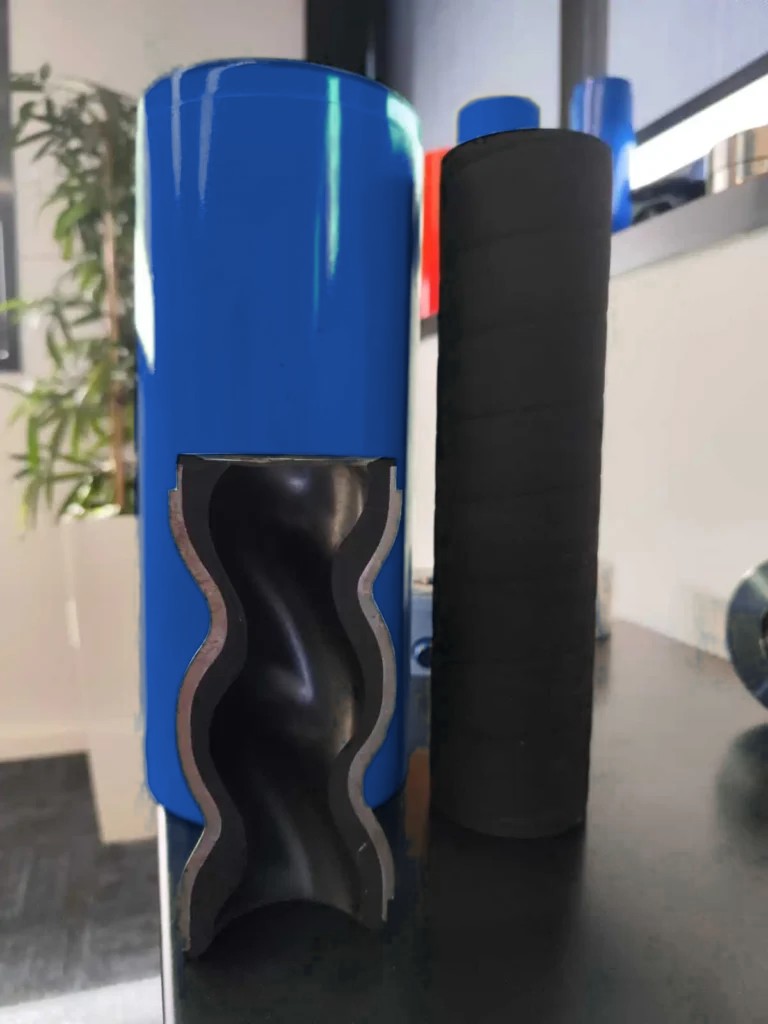
What do we consider when selecting the type of rubber used within the stator?
We must bear in mind that each area of application determines the resistance and qualities of the rubber. And it is only after years of experience that we are able to select the most suitable rubber according to the demands of the application and the conditions it is found in.
Practical example
Let’s say for instance, our fluid is basically animal fats.
When choosing the rubber, we will mainly consider regarding this type of substance:
- Chemical resistance to oils: mineral oil-based greases, animal, and vegetable fats. The type of fluid.
- Service or operating temperature.
After having thoroughly studied the fluid and knowing about different rubber features, we know that as far as NBR is concerned it has high resilience and its low-temperature elasticity is improved. If the acrylonitrile concentration is high, then the chemical resistance to oil increases.
As for FPM, it shows good resistance to hydrocarbons, mineral oils and greases with additives, fuels, and hydrocarbons. (in this case, if fat or oil temperature were above 100ºC).
These could be our two main choices.
According to this, we would exclude EPDM because it is suitable for hot water, steam, alkalis, oxidising agents, acids, bases, polar solvents, ketones, flammable liquids, flame retardants and so on. And it would not be the right choice for animal fats, as this rubber swells strongly in mineral oils and fats.
As for HNBR we know that this type of rubber is excellent for its resistance to oil, steam, hot water, and ozone.
In other words, we need to know exactly the material features we are using to avoid problems in the future.
Briefly put, we must bear in mind, at least, the following types
| Rubber | Properties |
|---|---|
| NBR | Excellent resistant to oil, widely used in industrial area. |
| EPDM | Excellent resistance to weather and ozone, good resistance to heat, and chemical (e.g. alkaline medium), compatibility for both acids and caustic applications, but it is not recommended with hydrocarbons (aromatic or chlorinated) fats or oils, (natural and synthetic). EPDM has poor resistance to oil, gasoline, and hydrocarbon solvents. |
| NR | High elasticity, good chemical strength. A do-all material used in diverse applications; combines superior mechanical properties and provides good chemical compatibility (especially with water-based products and weak bases, acids, glycols, and ketones. Due to its flexibility, we see it where we can find glasses, sands…in short, abrasive materials. |
| FKM | Excellent resistance to high temperature and a broad range of chemical, permeability and compression set are excellent. Can be used with strong acids and bases, aromatic solvents (car fuels), hydrocarbons, and synthetic and natural oils. Viton® has a good resistance to high temperatures, but it is not recommended to be used with abrasive or heavy-duty applications due to its mean resistance to abrasion. |
| HNBR | Thermal stability and oxidation resistance. High temperature resistance (120ºC-130ºC). |
And the list goes on and on.
Final remarks
Remember, this is just a starting point. As your biogas or any other sort of operation evolves, consulting with experienced pump manufacturers and engineers can help you select the most suitable stator/rubber technology to optimize your plant’s performance and efficiency. At the same time, don’t forget that during the lifetime of a pump, the type of fluid may change.
Contact Turoteknikk and we will help you choose the right stator and rubber for your needs. You can also read more about spare parts on our website.
Need help choosing a pump?
Tell us about your fluid, flow and plant, and we will help you choose the right pump.
- Company
- Turoteknikk Drift AS
- Address
- Hildertunet 2, 1341 Slependen
- Phone
- 67 80 63 00
- mail@turoteknikk.no
